Revomax vs Hydro Flask vs Stanley vs Yeti: Which Insulated Bottle Actually Wins in 2026?
People searching for "Revomax vs Hydro Flask" or "Revomax vs Stanley" aren't looking for brand cheerleading. They want numbers. They want to know exactly what $35 buys versus what C$90 buys, and whether the difference is real or just marketing.
This article gives you the data. We compare Revomax, Hydro Flask, Stanley, and Yeti across eleven measurable criteria — steel metallurgy, insulation retention times, lid mechanics, weight, warranty terms, and price. We'll tell you where each brand genuinely wins and where it falls short.
Spoiler: the competition isn't as close as the brands want you to think on certain dimensions. But on price, the mainstream options have a real argument. Read on.
The Contenders
Revomax (revomax.ca)
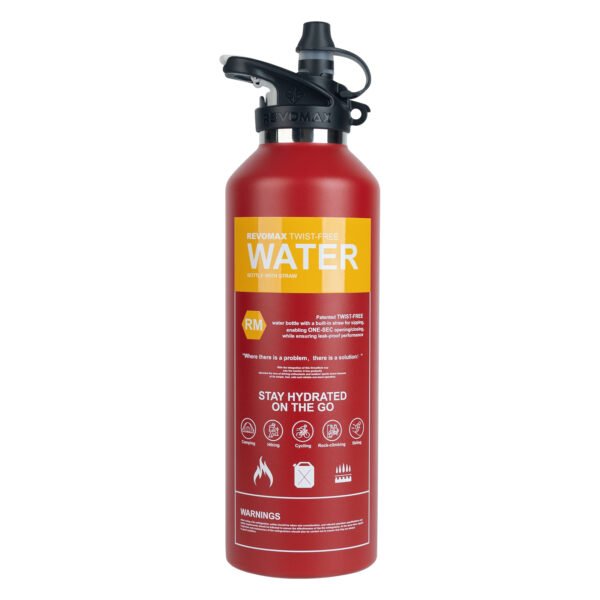
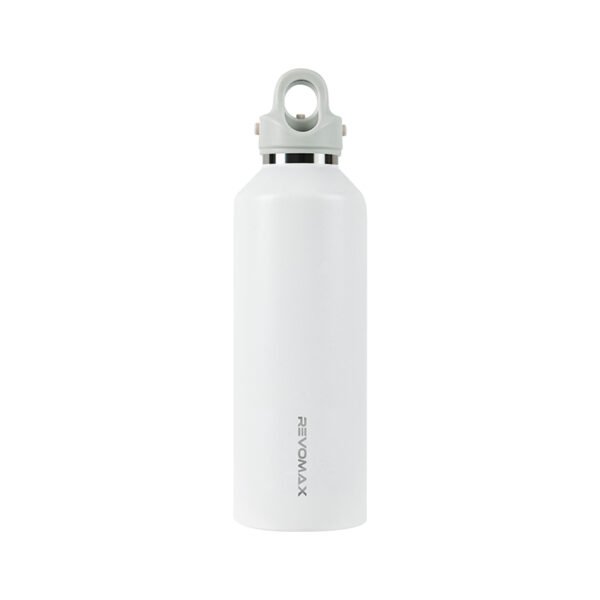
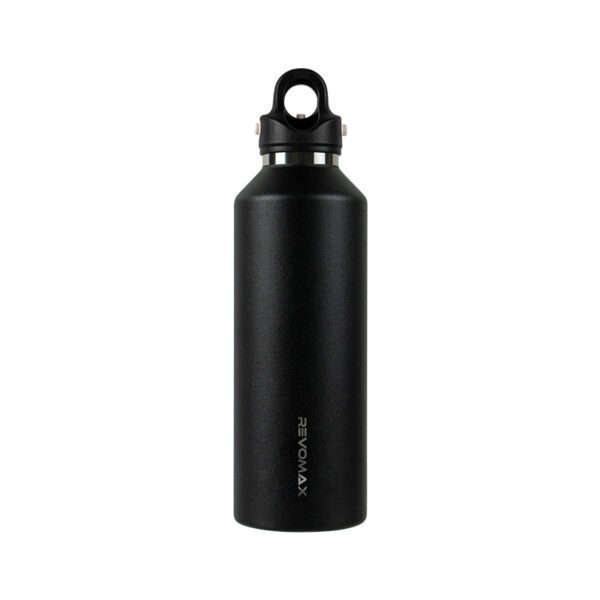
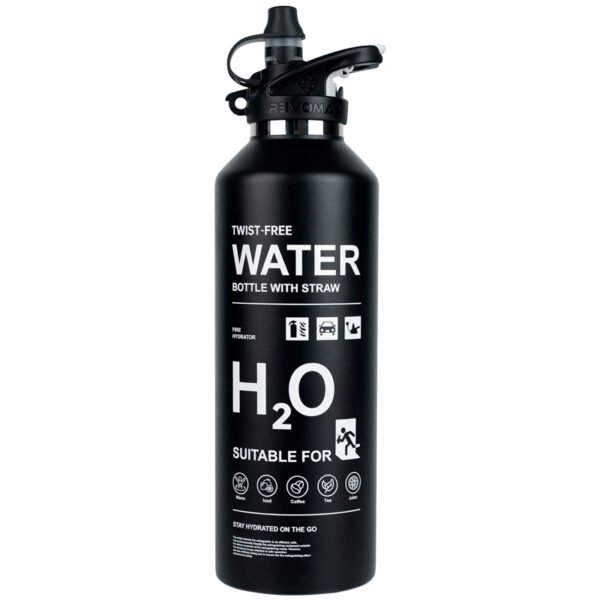
Revomax is a Portland-born brand best known for one engineering decision none of its competitors has matched: a patented twist-free lid. Instead of the industry-standard screw cap, Revomax uses a push-button mechanism that opens the bottle with a single hand motion. No twisting, no threading, no fumbling while driving or mid-pedal stroke.
The Canadian store at revomax.ca carries bottles made from 316L medical-grade stainless steel — the same alloy classification used in surgical instruments and medical implants. This is a meaningful material distinction, not a branding exercise (more on that in the steel deep-dive below).
Price range: approximately C$90–96 for a 20 oz bottle, with free shipping to the US & Canada and duties included at checkout — the listed price is the final landed cost.
Hydro Flask
Founded in Bend, Oregon in 2009, Hydro Flask essentially created the premium insulated bottle category in North America. Their TempShield double-wall vacuum insulation is genuinely effective, and the brand has an extensive range of sizes, colors, and lid configurations. They use 18/8 stainless steel (also called 304 steel), the industry standard across nearly all premium bottle brands.
Price range: approximately $35–45 USD for a 20 oz bottle.
Stanley
Stanley has been making insulated products since 1913. The brand's 110-year heritage is real — their original vacuum bottle design predates most other thermal container companies. Stanley surged back into mainstream culture with the Quencher tumbler in 2023–2024. Like most competitors, Stanley uses 18/8 (304) stainless steel.
Price range: approximately $35–45 USD for the Quencher 30 oz; smaller bottles slightly less.
Yeti
Austin, Texas-based Yeti built its reputation in the outdoor and hunting market before crossing into everyday carry. Their Rambler line is known for robust construction and an aggressive double-haul handle design. Steel grade: 18/8 (304) stainless, same as Hydro Flask and Stanley.
Price range: approximately $35–40 USD for the Rambler 20 oz.
Head-to-Head Comparison Table
The table below covers the eleven criteria most buyers care about. All retention times are based on published manufacturer specs and independent testing averages from multiple consumer outlets.
| Feature | Revomax 316L (revomax.ca) | Hydro Flask | Stanley Quencher | Yeti Rambler |
|---|---|---|---|---|
| Steel grade | 316L (medical/surgical) | 18/8 (304) | 18/8 (304) | 18/8 (304) |
| Molybdenum content | 2–3% | 0% | 0% | 0% |
| Lid mechanism | Twist-free push-button (patented) | Screw cap / flex lid | Straw lid / screw | Chug cap / screw |
| Hot retention | 12 hrs | 12 hrs | 8–10 hrs | 12 hrs |
| Cold retention | 24 hrs | 24 hrs | 8–12 hrs | 24 hrs |
| Weight (20 oz / 590 ml) | ~280 g | ~310 g | ~350 g (30 oz) | ~298 g |
| Price range | C$90–96 (~$67 USD) | $35–45 USD | $35–45 USD | $35–40 USD |
| Dishwasher safe | Yes (lid + body) | Lid yes, body no | Yes | Yes |
| Warranty | Lifetime | Lifetime | Lifetime | 5 years |
| Metallic taste risk | Very low (316L resists acid) | Low–moderate over time | Low–moderate over time | Low–moderate over time |
| One-hand open | Yes (push-button) | No (screw) | Partial (straw lid) | No (screw) |
| Leak-proof rating | Fully sealed | Depends on lid type | Depends on lid | Fully sealed |
Retention times vary by ambient temperature and usage. Weights are approximate and vary by size/color. Price comparisons use manufacturer retail pricing as of Q1 2026 — always confirm on each brand's own product page before buying.
Material Deep Dive: Why Steel Grade Matters
This is the section most comparison articles skip. They shouldn't.
304 Steel (18/8): The Industry Standard
18/8 stainless steel — so named because it contains approximately 18% chromium and 8% nickel — is used by Hydro Flask, Stanley, Yeti, and most other premium bottle brands. It is an excellent, food-safe material. Its corrosion resistance is real, and at room temperature with neutral liquids, it performs well.
The limitation shows up under two conditions: acidic beverages and long-term daily use. Chromium oxide forms a passive protective layer on 304 steel, but that layer is more vulnerable to attack from acidic compounds — coffee, lemon water, sports drinks, kombucha. Over time, and in very small quantities, ion migration can occur. This is what produces the faint metallic taste some long-term users report.
316L Steel: What Medical Grade Actually Means
316L stainless adds molybdenum to the 18/8 base formula. Molybdenum is the element that earns the "medical grade" designation: it substantially increases resistance to pitting corrosion and chloride-induced stress corrosion. The "L" suffix indicates low carbon content, which further reduces the risk of carbide precipitation (a corrosion mechanism that can affect weld zones and heat-treated areas).
This is why 316L is the preferred alloy for surgical instruments, orthopedic implants, food-processing equipment, and marine hardware — environments where corrosion resistance cannot be compromised.
Steel Grade Composition
| Property | 304 (18/8) | 316L |
|---|---|---|
| Chromium % | 17.5–19.5% | 16–18% |
| Nickel % | 8–10.5% | 10–14% |
| Molybdenum % | 0% | 2–3% |
| Carbon % (max) | 0.08% | 0.03% |
| Corrosion resistance | Good | Excellent |
| Pitting resistance (PREN) | ~18–20 | ~24–28 |
| Resistance to acidic environments | Moderate | High |
| Common applications | Cutlery, appliances, cookware | Surgical tools, implants, marine, food processing |
PREN (Pitting Resistance Equivalent Number): A higher PREN means greater resistance to localized corrosion. The gap between 304 and 316L is meaningful — roughly 25–40% better resistance in aggressive environments. None of the other brands in this comparison (Hydro Flask, Stanley, Yeti) currently offer 316L in their consumer product lines.
Lid Technology: Revomax's Real Differentiator
Every other brand here uses some form of screw or threaded lid. You unscrew it, you drink, you screw it back on. It works — that design is over a century old.
Revomax holds a patent on a different approach: a push-button, twist-free lid mechanism that opens the bottle with a single thumb press. No threading to align, no cap to lose, no cap to store awkwardly on a desk.
Why This Matters in Practice
| Use Case | Screw Lid | Revomax Push-Button |
|---|---|---|
| Drinking while driving | Requires two hands (or risky one-hand threading) | One hand, eyes forward |
| Cycling / running | Must stop or risk spilling | Open mid-motion |
| Gym / weight rack | Set bottle down, unscrew, pick up | One-hand access between sets |
| Hiking with gloves | Threading with gloves is difficult | Button press works with gloves |
| Kids / older adults | Fine motor threading can be awkward | Immediate access |
The lid is also fully sealed when closed — not a straw port or a partial seal. Revomax's lid passes a leak-proof test even when inverted in a bag. Hydro Flask's Flex Lid and various third-party lids partially address this with a loop-and-lock mechanism, but none achieve true one-hand operation. The Quencher's straw lid gets closer for drinking-in-motion but does not seal as completely when inverted.
The Taste Test: What Acidic Beverages Reveal
This is harder to quantify than a metallurgical table, but it's the most commonly reported real-world complaint with 304 steel bottles over time.
The mechanism: when acidic liquids (pH below ~4.5) are stored in 304 steel for extended periods, the passive chromium oxide layer is more susceptible to micro-degradation, resulting in trace metal ion transfer into the liquid. The concentrations are well below any health threshold — this is a taste issue, not a safety issue.
Liquid pH Reference
| Beverage | Approx. pH | Risk with 304 Steel |
|---|---|---|
| Plain water | 6.5–7.5 | None |
| Black coffee | 4.5–5.0 | Low–moderate with long storage |
| Cold brew coffee | 5.0–5.5 | Low |
| Lemon water | 2.5–3.5 | Moderate–high with long storage |
| Sports drinks | 2.9–3.2 | Moderate–high |
| Kombucha | 2.5–3.5 | Moderate–high |
| Orange juice | 3.3–4.0 | Moderate |
316L and acidic beverages: The molybdenum content and lower carbon in 316L make it significantly more resistant to the corrosion mechanism above. In practice, users report no metallic taste even after months of daily coffee or citrus water — consistent with 316L's established use in food-processing equipment that handles acidic compounds continuously.
The taste difference is most noticeable for users who drink coffee or lemon water daily from the same bottle, leave acidic beverages in the bottle for 8+ hours, or have compared bottles directly. If you fill your bottle exclusively with plain water, this distinction is academic. If you're a daily coffee or lemon-water person, it's not.
Price-to-Value Analysis
Let's be direct about the numbers.
| Bottle | Size | Steel | USD (approx.) | CAD (approx.) |
|---|---|---|---|---|
| Hydro Flask Standard Mouth | 20 oz | 304 (18/8) | $35–45 | $48–62 |
| Stanley Classic Bottle | 16 oz | 304 (18/8) | $30–40 | $41–55 |
| Yeti Rambler | 20 oz | 304 (18/8) | $35–40 | $48–55 |
| Revomax (revomax.ca) | 20 oz | 316L | ~$67 USD | ~C$90–96 |
Revomax is more expensive. At roughly 1.7–2x the price of competitors, that premium demands justification. Here is what it pays for:
- 316L vs 304 steel: Not a marginal upgrade. 316L is a genuinely different alloy with a documented performance advantage in corrosion resistance. In industrial and medical contexts, the upcharge for 316L over 304 is standard and accepted — the material simply costs more to produce.
- Patented lid technology: The push-button mechanism is not available on any other bottle in this segment. Engineering a novel lid that is also fully leak-proof carries a real cost.
- Duties and shipping included: revomax.ca pricing includes free shipping to the US & Canada with duties covered at checkout. The landed cost is the listed price — no surprise charges at delivery.
The honest framing: You are not paying more for the same product with a different logo. You are paying for a material-grade upgrade and a lid innovation. If you fill your bottle with plain water and mostly drink at a desk, the 304 bottles from Hydro Flask, Stanley, or Yeti will serve you well for a very long time at a lower price — they are good products. If you drink coffee, citrus water, or sports drinks daily, value one-hand access, or want the material security of 316L, the Revomax premium has a concrete, data-backed rationale.
Our Verdict: Who Wins?
This is not a single-winner situation. Different bottles win on different criteria.
Revomax wins on: steel grade (316L is objectively higher-grade than 304 — no other brand here offers it); lid innovation (the only truly one-hand, twist-free lid in the category); taste neutrality with acidic drinks; and warranty + shipping value (lifetime warranty, free North American shipping, duties included).
Hydro Flask wins on: color range and accessory ecosystem, brand recognition, and price.
Stanley wins on: heritage and culture (110 years), the tumbler format for desk/car use, and price.
Yeti wins on: perceived toughness, handle design for active outdoor use, and cold retention (matches Revomax and Hydro Flask at 24 hours).
Overall recommendation
| Your Priority | Best Choice |
|---|---|
| Best steel, best for acidic drinks | Revomax (revomax.ca) |
| One-hand access (gym, cycling, driving) | Revomax (revomax.ca) |
| Best price for casual daily use | Hydro Flask or Stanley |
| Outdoor / adventure / rugged use | Yeti or Revomax |
| Tumbler / desk format | Stanley Quencher |
| Widest size/color selection | Hydro Flask |
Ready to upgrade to 316L medical-grade steel?
Free shipping to the US & Canada. Duties included. Lifetime warranty.
Shop the Revomax 20oz 316L →Frequently Asked Questions
Is Revomax 316L actually medical grade, or is that just marketing?
316L stainless steel is a formal alloy designation, not a marketing term. It is classified as a medical-grade material by ISO and ASTM standards and is approved for surgical instruments, orthopedic implants, and food-contact equipment. The "L" designation (low carbon) is a specific metallurgical classification. revomax.ca explicitly carries the 316L variant, which is verifiable against the alloy specs.
Does Hydro Flask taste like metal?
New Hydro Flask bottles typically do not. The metallic taste issue with 304 steel tends to develop gradually over time, particularly with daily use of acidic beverages like coffee, lemon water, or sports drinks. Many users never notice it. Those who use their bottle for acidic drinks and have high taste sensitivity are the most likely to experience it over months of daily use.
Is Revomax's lid actually leak-proof?
Yes. The push-button lid is fully sealed when closed and passes inversion leak tests. Unlike straw lids (which rely on a flap that can fail under pressure) or loop-lock lids (which depend on an o-ring and threading), the Revomax lid uses a mechanical lock that engages automatically when the button is released. The seal is rated for bag carry without leaking.
Why is Revomax so much more expensive than Hydro Flask or Stanley?
Two primary factors: material cost and lid engineering. 316L stainless is more expensive to produce than 304, and the patented twist-free lid carries manufacturing and licensing costs that screw-cap designs do not. Additionally, revomax.ca pricing includes duties and free North American shipping — the listed price is the total landed cost, which narrows the real-world gap versus competitors where shipping and import fees may apply.
Does Revomax have a warranty?
Yes. Revomax offers a lifetime warranty on their bottles, with Canadian support handled through revomax.ca. This matches or exceeds Hydro Flask (lifetime) and Yeti (5 years), and equals Stanley's lifetime coverage.
Can I put my Revomax in the dishwasher?
Yes. Both the lid and the bottle body are dishwasher safe — a practical advantage over Hydro Flask, whose official guidance recommends hand-washing the bottle body to preserve the powder-coat finish.
Which bottle is best for hot coffee specifically?
For hot retention, Revomax, Hydro Flask, and Yeti all hold heat for roughly 12 hours; Stanley lags slightly at 8–10 hours. For taste quality with coffee, Revomax's 316L steel has a concrete metallurgical advantage — 304 steel is more susceptible to mild ion migration in acidic, high-temperature liquids over time. If coffee is your primary use case, 316L is the technically superior choice.
The Bottom Line
The insulated bottle market has converged on 304 stainless steel and screw-top lids because both are cheap to manufacture, reliable, and good enough. Hydro Flask, Stanley, and Yeti are all good products at fair prices for what they are.
Revomax on revomax.ca is a different proposition. It is not premium-priced for branding — it is premium-priced for a material upgrade (316L) and a mechanical innovation (twist-free lid) that genuinely do not exist elsewhere in the category at any price. If the data matters to you, the choice is straightforward. If price is the primary variable, the mainstream brands deliver strong value. Either way, you now have the numbers.
Revomax 316L bottles available at revomax.ca — free shipping to the US & Canada, duties included.